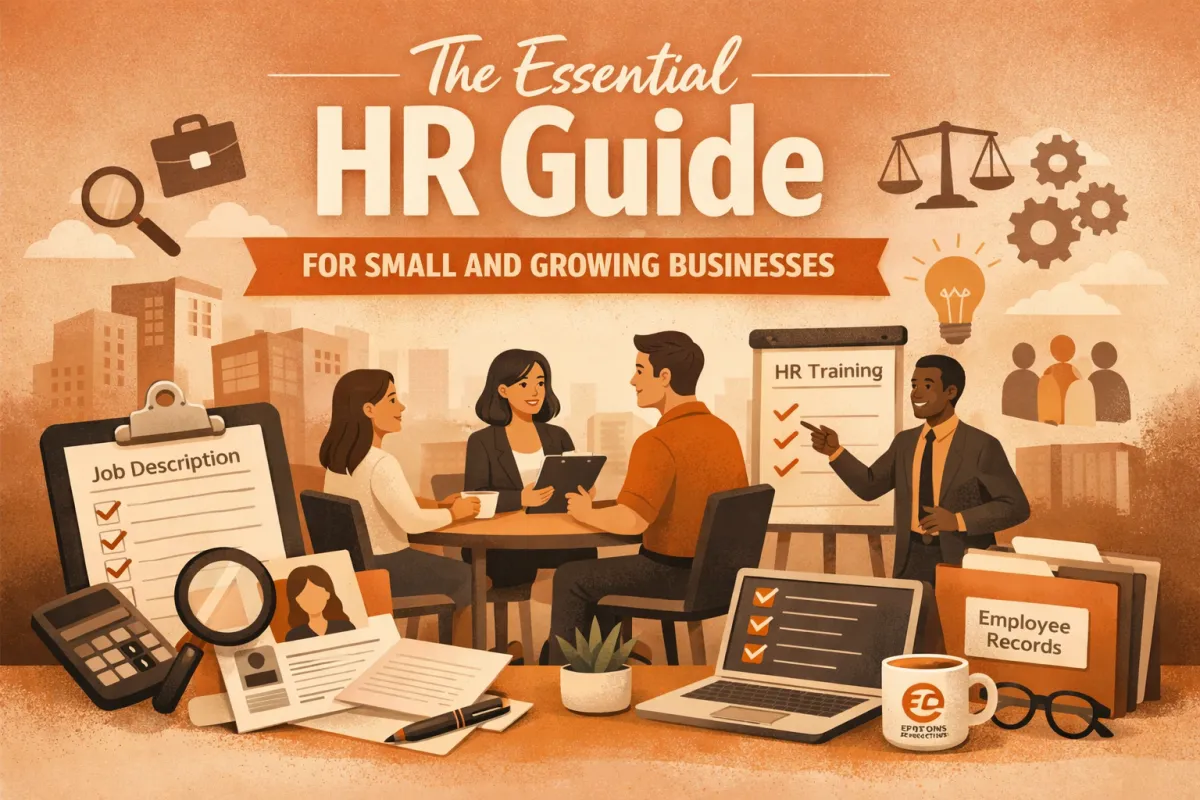
The Essential HR Guide for Small and Growing Businesses
You might be thinking, “What is all this HR about?” or “What does HR even do?”.
In many organisations, Human Resources is the team that looks after everything related to people. HR is a support function responsible for:
Recruitment and onboarding
Training, learning and development
Workplace investigations
Employee engagement initiatives
Diversity, Equity and Inclusion work
Reporting and compliance
Advice on pay, awards and legal instruments
More recently, HR has also taken on responsibility for the governance and ethical use of AI in the workplace.
HR delivers all of this through consultation; understanding the needs of individuals, teams, and the wider organisation, and helping leaders make informed, people‑centred decisions.
So what does HR look like in small organisations?
Small businesses don’t always need the full suite of HR functions. Most commonly, SMEs need guidance in a few key areas:
Recruitment, Selection and Onboarding
As an organisation grows, its people needs grow too, often before the business has clarity on what those needs actually are. HR can support by:
Developing clear job roles and job descriptions
Determining appropriate pay using modern awards or industry benchmarks
Drafting job advertisements that attract quality candidates
Screening applications, preparing interview questions, and supporting interviews
Issuing onboarding documentation, including contracts and probity checks
Workplace Investigations
When issues arise, HR provides confidential, fair and practical advice. Whether it’s conflict between staff, concerns about conduct, or underperformance, HR helps leaders navigate the situation with procedural fairness and clarity.
Training, Learning and Development
Businesses are legally required to provide certain training (such as sexual harassment training). HR can design and deliver this training, as well as support:
Career and succession planning
Coaching and capability development
Annual performance review processes
While many organisations feel they “don’t have time” for this work, it’s essential for engagement, retention, and preparing staff for the roles your business will need as it grows.
Reporting and Compliance
Australian business law requires accurate record‑keeping: contracts, resumes, interview notes, performance documents and more. While leaders can manage this, HR professionals are trained in best practice and can take on this administrative load so business owners can stay focused on operations.
What does this mean for your small business?
Many SME owners feel overwhelmed by the people‑related work that comes with growth. They know they need support, but don’t have the budget or workload to justify a full‑time HR role.
This is where fractional or outsourced HR support becomes a smart solution.
Working with a fractional HR professional, like Epton Connections, means you:
Only pay for the work you need
Access expert HR support without the cost of a full‑time hire
Get guidance that grows with your business
Have someone you can call when issues arise before they become bigger problems
If you’re looking for a flexible HR solution, you can book a free discovery call here: https://eptonconnections.com.au/consultation