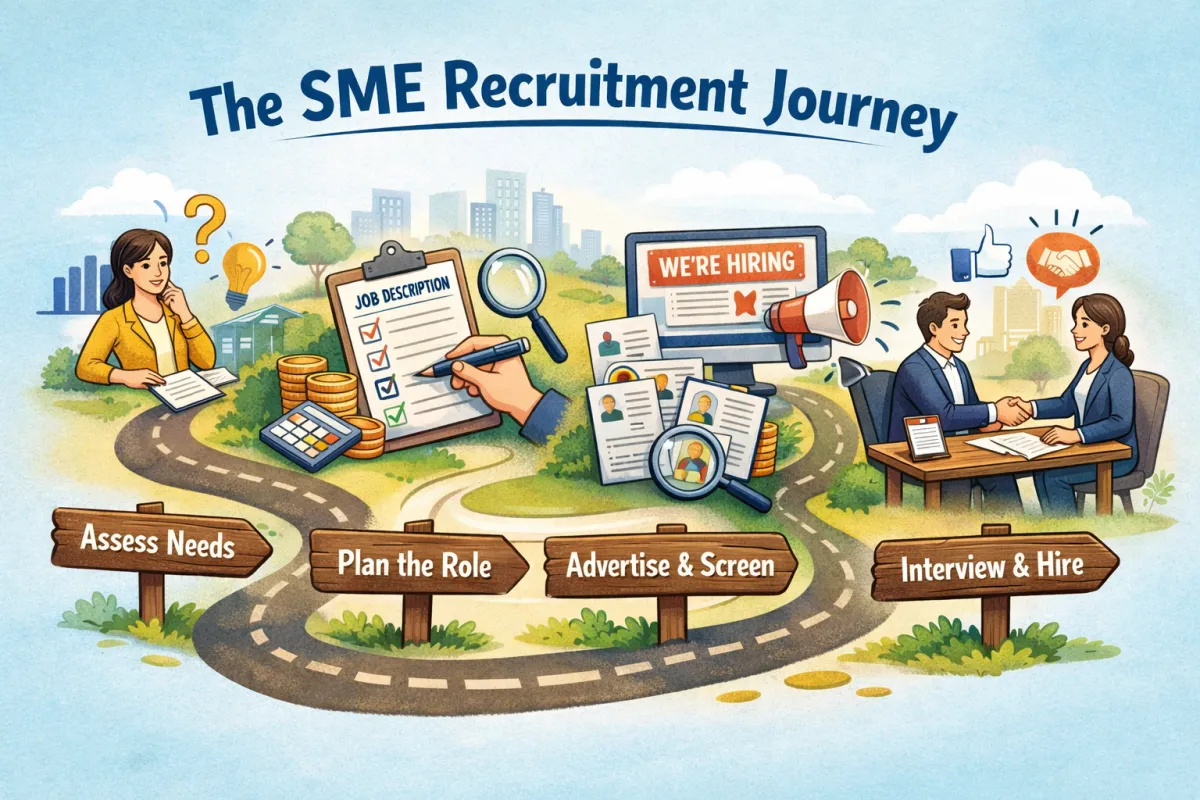
Before You Hire: The Essentials for SMEs Taking the Next Step
In my last blog, I wrote about what HR can do in small and medium organisations. Today, I want to focus on Recruitment; what it is, what your legal obligations are, and how to know when it’s time to take the plunge.
Whether you’re thinking about hiring your first staff member or your fourth, fifth or tenth, there are a few things you should understand before you begin.
Firstly, you need to determine your operational needs.
Start by asking why you want to bring someone on.
Is your workload becoming unmanageable?
Are you expanding and need new skills in the business?
Clarifying this helps you decide where to start.
If your workload is simply too high, consider whether better systems could reduce pressure more effectively than hiring. For example, if you’re losing track of client leads or emails, investing in a CRM might streamline your workflow and delay the need for an employee.
Forbes (2025) uses a helpful rule of thumb: when your workload reaches 70% of your available capacity, it’s time to hire.
If you’re expanding and need new skills, consider whether upskilling yourself or existing staff could fill the gap before recruiting externally.
Secondly, decide in what capacity you need the work done.
Not every gap requires an employee. Could outsourcing solve the problem?
For example, if you’re behind on social media and need a strategy, it may be more cost‑effective to outsource than hire internally.
If you do decide to employ someone, determine early whether the role will be casual or permanent, full‑time or part‑time, or whether it’s a project‑based or max‑term role. This clarity prevents poor hiring decisions and sets expectations from day one.
It’s also important to think about how the role is likely to grow and change as your business expands. SMEs evolve quickly and the first few hires often end up wearing multiple hats or stepping into broader responsibilities over time. Considering this early helps you:
hire someone with the capacity to grow
avoid having to restructure too soon
plan training or development pathways
build a role that supports both current and future needs
At this stage, you should also define:
The current tasks and responsibilities to be completed (your position description)
The skills required
Hours of work, location and flexibility
The wage or salary (via the relevant Modern Award, or an Individual Employment Agreement)
Thirdly, budget for the role
Hiring comes with costs beyond wages. Make sure you factor in:
Superannuation
PAYG withholding
Workers’ compensation insurance
Equipment, software and workspace
Leave liabilities
Understanding the full cost upfront protects your cash flow and prevents surprises later.
Fourthly, prepare for advertising the role
When you’re looking for that special someone to join your business, you want more than skills — you want fit. Someone who understands your business, aligns with your values, and represents your brand well.
Legally, you cannot make decisions based on “gut feel”, so you need to think carefully about how you attract the right people.
Honest Recruitment (or positive recruitment) is a transparent approach that sets clear expectations from the start. It might include statements like:
“This is a start‑up environment.”
“The successful candidate will need to work through periods of change and with limited structure.”
This honesty prevents misunderstandings and improves long‑term satisfaction and retention.
Seek.com is a good place to explore job ad layouts, but make sure your advertisement reflects your brand and the realities of your workplace.
Finally, you are no longer in recruitment phase and you are entering the selection process.
Once your ad is live, you’re officially out of recruitment and into selection. This phase includes:
Screening applicants
Drafting interview questions
Conducting interviews
From here, you’ll transition into onboarding, which I’ll cover in future blog posts.
Feeling overwhelmed? You’re not alone.
SME owners often feel swamped by the administrative load that comes with growth. Epton Connections can help you navigate the complexity of recruiting your first employee and set your business up for long‑term success.
If you’re looking for a flexible HR solution, you can book a free discovery call here: https://eptonconnections.com.au/consultation
References:
How To Hire Your First Employee And Build A Strong Foundation For Growth